
The Forest

The day started out like any typical sunny Midwestern summer day; a brilliant, nearly cloudless blue sky stretching overhead, accompanied by that familiar, heavy warmth. Eager to get outside, I had decided to head out to one of my favorite places in the area: Farmdale Reservoir.
Tucked away from the main roads, the sprawling acreage feels like a sudden, quiet escape. The park, originally built by the Army Corps of Engineers during the Great Depression for flood control, has placed itself as one of the area’s most popular hiking destinations now, and for good reason.
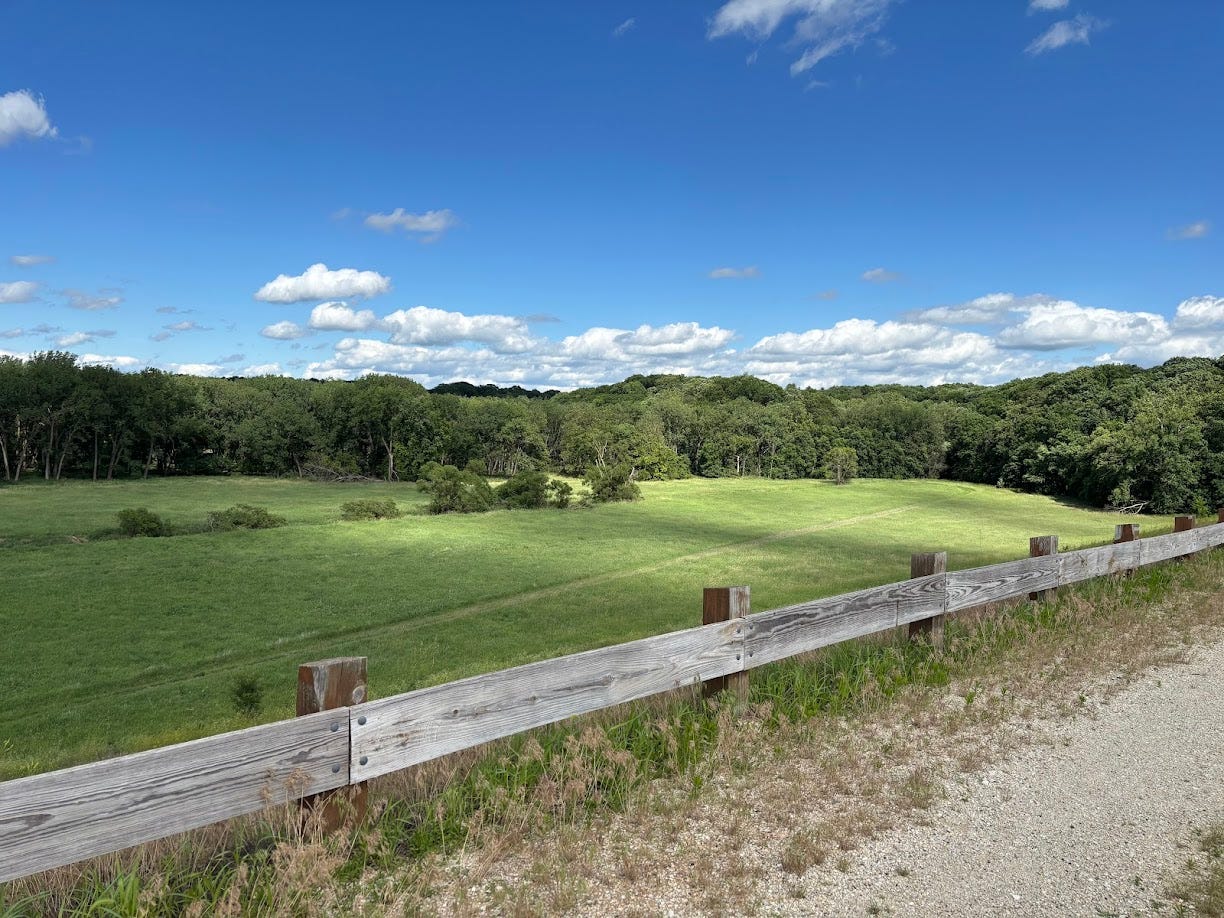
As I made my way across the dam, I slipped into a familiar headspace of quiet intrigue. Glancing to my left, I noticed two women sitting together, sketching the open field before them. My eyes drifted over that same meadow and landed on the exact spot where a few friends and I once shared a late-night painting session. We had talked about relationships and gender, though the conversation carried a tone my younger self was still too uncomfortable to fully accept. I still have that very painting.
The moment I stepped off the dam and into the forest, immediate civilizational silence. Birds called out to one another, trading songs of danger and love. A gentle breeze wove through the thick, towering canopy of pines, oaks, and maples. And in that single moment, I was instantly transported home.
For me, the forest is more than just a destination for a summer hike. It is peace and calm, mystery and education; it is my safe space. Growing up in a low-income, working-class family, we didn't have much. Add to that the heavy expectation of becoming the patriarch—the last possible chance for a 400-year-old American family tree to continue—and it became apparent, from as far back as I can remember, that I didn't have a choice in life. I was supposed to be the savior of the Carter name. What I did have open access to, though, was nature.
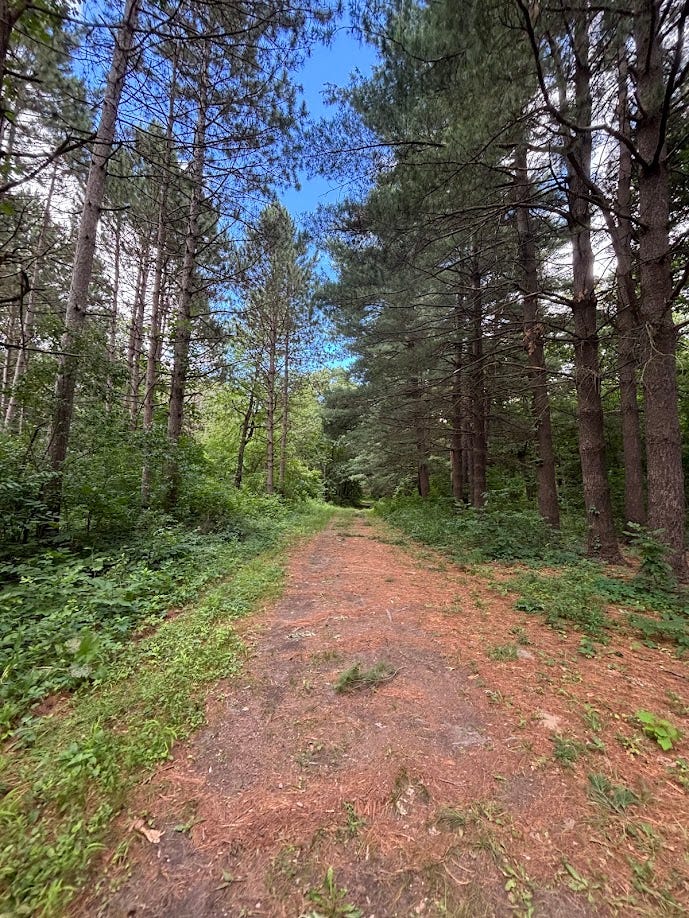
Every day after school, I would come home, fold and deliver newspapers, and immediately disappear into the forest. I specifically timed the end of my route to finish at the edge of our neighborhood. From there, I would scramble down to Lick Creek and spend as long as I could observing the wildlife, studying the plants, and watching the water flow. I built tree forts, cabins, and bridges across the streams. It was a place for me to unwind and get away. It was my sanctuary.
Spending time in the woods feels different now. I once used it as an escape; a place to run from my fears, my family, and the person I was afraid of becoming. Today, the forest is no longer a place to hide. Instead, it is a space for reflection on who I am. It is still my safe space, but in an entirely new way.
From the outside, the forest looks the same year after year. Yet, it is always changing in subtle ways. The mighty oaks grow just a little bit wider, and the winding creeks shift their courses ever so slightly with each passing storm. Peering down into the shallows, you can spot the newest generation of mudbugs coming of age, while overhead, squirrels dance through the branches, darting to and from their nests high in the trees.
Two hours later, I began my walk back across the dam toward my car, and that constant hum of change was already evident. The two women from earlier were gone, having likely finished their sketches and moved on to the next part of their day. Looking around, I saw that never-ending evolution reflected everywhere. I saw myself. I saw the LGBTQ+ community. And I saw the immense joy that transitioning has afforded me. I hope one day humanity learns to see each other the way we see the forest. Change doesn't have to be terrifying or abrupt. It just needs to be enough to cultivate a safe space for everyone, no matter who you are.
A really convalescent piece for all of us recovering from the outrages of the anthropocene. Thank you, Zoey!